Table of Contents
- The Primary Goal of Child Custody Laws
- Explaining the Right of Hizanat for Mothers
- How Courts Define the Welfare of the Minor
- When the Father Can Seek Legal Custody of Children
- Why High Courts Rarely Change Family Court Decisions
- Final Thoughts on Guarding a Child’s Future
Child custody laws in pakistan
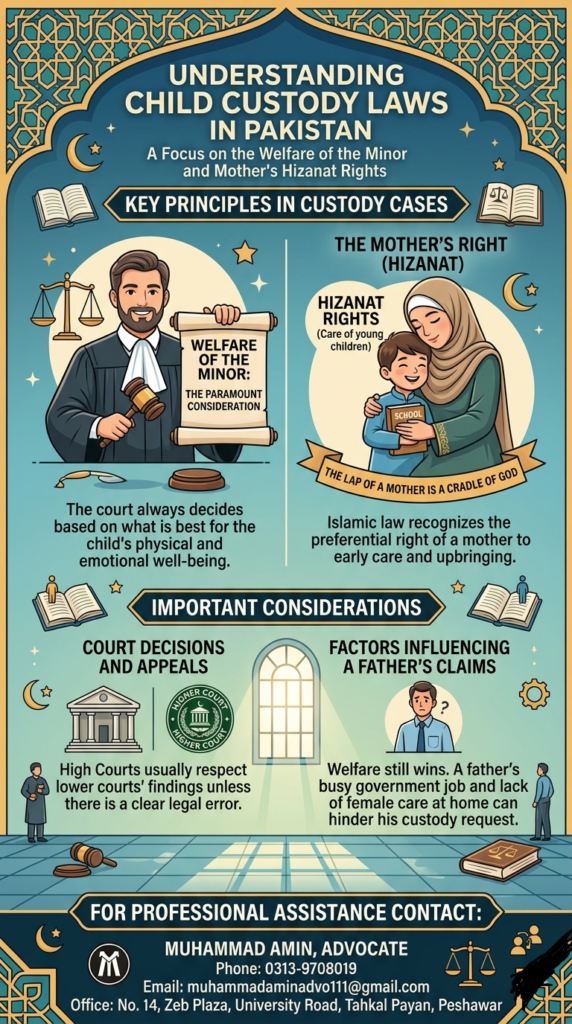
The legal system in Pakistan places the highest value on the safety and happiness of children during divorce or separation. When parents fight over a child, the Guardian and Wards Act 1890 acts as the main guide for judges. This law ensures that every decision serves the best interests of the child rather than the ego of the parents. Judges look at who can provide the most stable home, better education, and deeper emotional support. In most cases, the court believes that a child needs the warmth of a mother’s lap more than anything else in the world.
Explaining the Right of Hizanat for Mothers
The Right of Hizanat refers to the natural right of a mother to keep her children during their early years. Under Islamic principles and Pakistani law, a mother usually keeps custody of a boy until he is seven years old and a girl until she reaches puberty. The courts consider the mother the best guardian because she provides a unique type of love that no one else can replace. Even if a mother is poor, the law does not take the child away from her. The father must still pay for the child’s expenses while the mother provides the daily care and upbringing.
How Courts Define the Welfare of the Minor
When judges talk about the minor’s welfare in law, they look at the child’s current environment and emotional bonds. If a child has lived with the mother since birth, moving them to a new house can cause deep emotional pain. The court views the mother’s home as a “cradle of God” where the child feels safest. Judges also check the school records and the health of the child to see if the mother is doing a good job. If the child is happy and studying well, the court sees no reason to disturb that peaceful life.
When the Father Can Seek Legal Custody of Children
While the mother has strong rights, the father’s right to guardianship is also important. The father remains the natural guardian who must provide financial support. However, a father can ask for physical custody if he proves that the mother is unfit. For example, if a mother marries a stranger who is not related to the child, she might lose her right of Hizanat. But even then, the court only moves the child if the new marriage actually harms the child’s welfare. If a father is a drug addict, a criminal, or stays away from home too much for work, the court will likely refuse his request for custody.
Why High Courts Rarely Change Family Court Decisions
The legal custody of children usually stays settled once a Family Court and a District Court agree on a decision. When a father takes the case to the High Court through a constitutional petition, the judges follow strict rules. They do not re-examine all the evidence or listen to witnesses again. Instead, they only check if the lower courts followed the law correctly. If the lower courts made a fair decision based on the welfare of the child, the High Court will not interfere. This prevents endless soul-crushing litigation and brings stability to the child’s life.
Final Thoughts on Guarding a Child’s Future
Protecting a child during a legal battle requires a soft heart and a clear understanding of the law. Courts consistently rule that the mother is the best person to raise a young child unless there is a very big problem. They believe that a child should grow up in a loving home rather than an “alien environment” with relatives who cannot provide a mother’s care. Every case proves that the law values the child’s smile and safety above all legal technicalities.
For professional assistance with law services and related legal matters,or for Child custody laws in pakistan contact: Call any time
Muhammad Amin, Advocate 📞 Phone: 0313-9708019 📧 Email: muhammadaminadvo111@gmail.com 📍 Office: Office No. 14, Zeb Plaza, University Road, Tahkal Payan, Peshawar