Table of Contents
- Understanding the Legal Requirement for Court Fees
- The Judicial Duty to Determine Precise Fee Shortfalls
- Rectification of Deficiency in Court-Fees as a Constitutional Right
- Balancing State Revenue with the Fairness of Legal Proceedings
- Consequences of Procedural Errors and Judicial Discretion
- The Supreme Mandate for Substantial Justice over Technicalities
Understanding the Legal Requirement for Court Fees
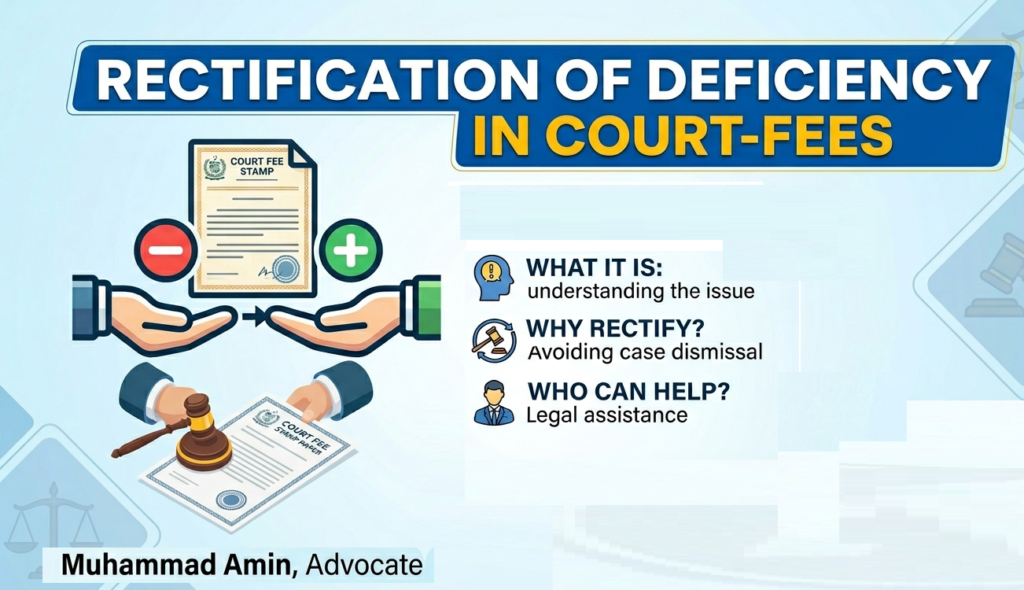
The legal system requires citizens to pay specific fees through stamps when they file appeals or suits in court. These payments help the state manage the judicial machinery and ensure that only serious litigants use the time of the court. However, many people make honest mistakes during the filing process and submit documents without the correct value of stamps. This situation often leads to a memorandum of appeal appearing inadequately stamped or invalid at first glance. Instead of punishing a person immediately for such a minor error, the law provides a clear path for rectification of deficiency in court-fees. This mechanism ensures that a technical oversight does not block the doors of justice for anyone.
The Judicial Duty to Determine Precise Fee Shortfalls
When a court office identifies an error in the payment of stamps, the judge holds a specific legal responsibility. The court must not simply reject the case or grant vague adjournments without giving clear instructions. Instead, the presiding officer must calculate the exact amount of money that the petitioner still owes to the state. After the judge identifies this specific sum, they must grant a reasonable period for the person to pay the remaining balance. This process of correcting court fee shortfalls requires active participation from the bench to guide the litigant. If the court fails to mention the exact amount needed, the litigant remains in the dark and cannot fulfill their legal duty effectively.
Rectification of Deficiency in Court-Fees as a Constitutional Right
The Constitution of Pakistan protects the right to a fair trial under Article 10-A for every citizen. A fair trial means that the court must hear the merits of a case rather than dismissing it on small procedural grounds. When a judge rejects an appeal because of a minor stamp error without allowing for the rectification of deficiency in court-fees, they violate this fundamental constitutional guarantee. Legal experts argue that the right to be heard is far more important than the immediate collection of revenue. Therefore, any judicial order that dismisses a case without providing a chance to fix fee errors lacks legal validity. The law intends to help the person reach the courtroom, not to find excuses to keep them out.
Balancing State Revenue with the Fairness of Legal Proceedings
The Court-Fees Act of 1870 exists primarily to collect revenue for the state and to facilitate the administration of justice. It does not exist to give one party a technical weapon to defeat their opponent unjustly. Courts must maintain a delicate balance between protecting the financial interests of the province and ensuring that every person receives a fair hearing. By allowing for resolving inadequate court fees, the judiciary upholds the integrity of the law while still ensuring the state eventually receives its due share. This balanced approach prevents the law from becoming a rigid trap for those who lack deep technical knowledge of stamp duties.
Consequences of Procedural Errors and Judicial Discretion
Sometimes, legal practitioners make unintentional mistakes when drafting pleadings or calculating the necessary stamp duty. While these errors are regrettable, they do not always reflect a desire to cheat the state or delay the case. Judges possess the discretion to allow proper stamping even after a party has filed the document in court. Once the person fixes the court fee payment errors, the law treats the document as if the person filed it correctly from the very first day. However, litigants must not show stubbornness or ignore the court’s deadlines. If a person repeatedly refuses to pay the fee despite clear orders and extra time, the court may finally decide to reject the document.
The Supreme Mandate for Substantial Justice over Technicalities
The ultimate goal of every court is to deliver substantial justice rather than focusing purely on technical compliance. A judge earns respect not by following rigid rules that lead to unfairness, but by acting as a fair arbiter who fixes injustices. The law serves the people, and technicalities should always remain secondary to the actual rights of the parties involved. When a litigant seeks fixing unpaid legal stamps, the court should view it as a step toward a final and fair resolution. By prioritizing the spirit of the law over minor clerical mistakes, the judiciary strengthens the public’s trust in the entire legal system of the country.
For professional assistance with law services and related legal matters, contact: call any time
Muhammad Amin, Advocate 📞 Phone: 0313-9708019 📧 Email: muhammadaminadvo111@gmail.com
📍 Office: Office No. 14, Zeb Plaza, University Road, Tahkal Payan, Peshawar