Reconciliation in Family Law: Court Procedures and Mediation
📞 Phone: 0313-9708019
Family lawsuits frequently deal with matters such as inheritance, maintenance, divorce, and custody. These emotionally sensitive cases can have consequences far beyond the immediate legal dispute. Therefore, reconciliation provides family members with an opportunity to discuss their disagreements in a structured setting, including under court supervision where applicable.
Reconciliation can help families explore an amicable settlement and reduce the need for prolonged and adversarial litigation. This approach recognizes that family disputes often require practical solutions because they can affect long-term relationships, children, finances, and family responsibilities.
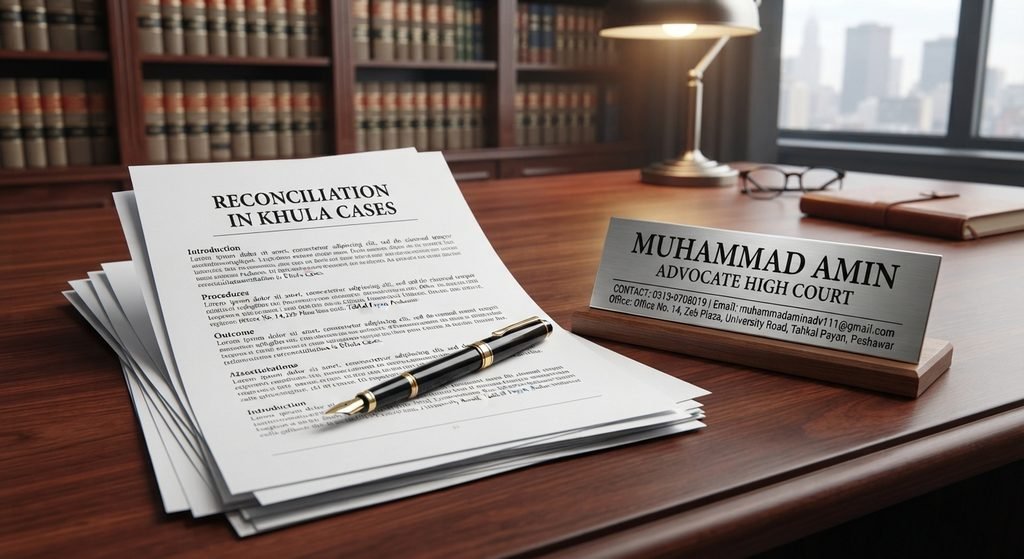
Many legal systems include reconciliation or settlement mechanisms in family proceedings, particularly in matters involving divorce, maintenance, custody, and other family disputes. Courts may encourage a non-adversarial approach where appropriate, while also considering the legal rights and interests of all parties.
In family proceedings involving children, courts may also consider the welfare and best interests of the children, along with financial circumstances and other relevant factors prescribed by law.
Pretrial Procedures and Early Hearing Scheduling
Pretrial procedures can provide an opportunity to explore early settlement and reduce the emotional burden on the parties. Depending on the applicable family-law procedure, the court may consider reconciliation or settlement at an early stage after receiving pleadings or applications concerning divorce, custody, maintenance, or other family matters.
Timely hearings can help prevent disputes from becoming unnecessarily prolonged and may reduce uncertainty for the parties. Early court intervention can therefore provide an opportunity to identify issues and determine whether an amicable resolution is possible.
Review of Pleadings and Finding Core Issues
During the preliminary stages of a family case, the court examines the pleadings, relevant facts, and the issues raised by both sides. Understanding the actual points of disagreement can help determine whether the matter is suitable for settlement or reconciliation.
Legal counsel plays an important role by presenting the client’s position clearly, identifying the principal legal and factual issues, and advising the client about possible settlement options without compromising lawful rights.
The Role of the Court in Promoting Mediation
Courts may encourage parties to explore reconciliation or settlement where the applicable law and circumstances permit. Discussions can help parties identify areas of agreement and understand the issues that remain disputed.
Mediation provides a structured and neutral environment in which parties may communicate their concerns and explore mutually acceptable solutions. Where appropriate, professional mediators or other qualified professionals may assist the parties in facilitating communication.
If the court considers that reconciliation or settlement may be possible, the parties may be given an opportunity to engage in further discussions or appropriate counseling, subject to the applicable legal procedure and the circumstances of the case.
Why Reconciliation Matters: Family disputes can affect relationships, children, finances, and long-term family responsibilities. Exploring lawful settlement options at an appropriate stage can help parties resolve disputes while preserving their legal rights.
Professional Legal Assistance in Family Matters
Family disputes require careful handling because legal proceedings can have lasting consequences for the parties and their families. Understanding the applicable law, court procedure, and available settlement options is important before making significant decisions.
If you are involved in a family dispute concerning divorce, maintenance, custody, inheritance, or another family-law matter, professional legal guidance can help you understand your rights, obligations, and available legal options.
Contact Muhammad Amin, Advocate High Court
For professional assistance with family law, reconciliation, mediation, and related legal matters, contact the office for consultation and legal representation.
Muhammad Amin, Advocate High Court
📞 Phone: 0313-9708019
📧 Email: muhammadaminadvo111@gmail.com
📍 Office:
Office No. 14, Zeb Plaza, University Road
“`