
Table of Contents
- What Exactly is Leave to Appeal?
- The Crucial Test for Granting Permission
- Case Study: When the Court Denies Leave
- Why Transparency Matters for Your Case
- Final Takeaways on the Legal Process
- Expert Help for Supreme Court Appeals
What Exactly is Leave to Appeal?
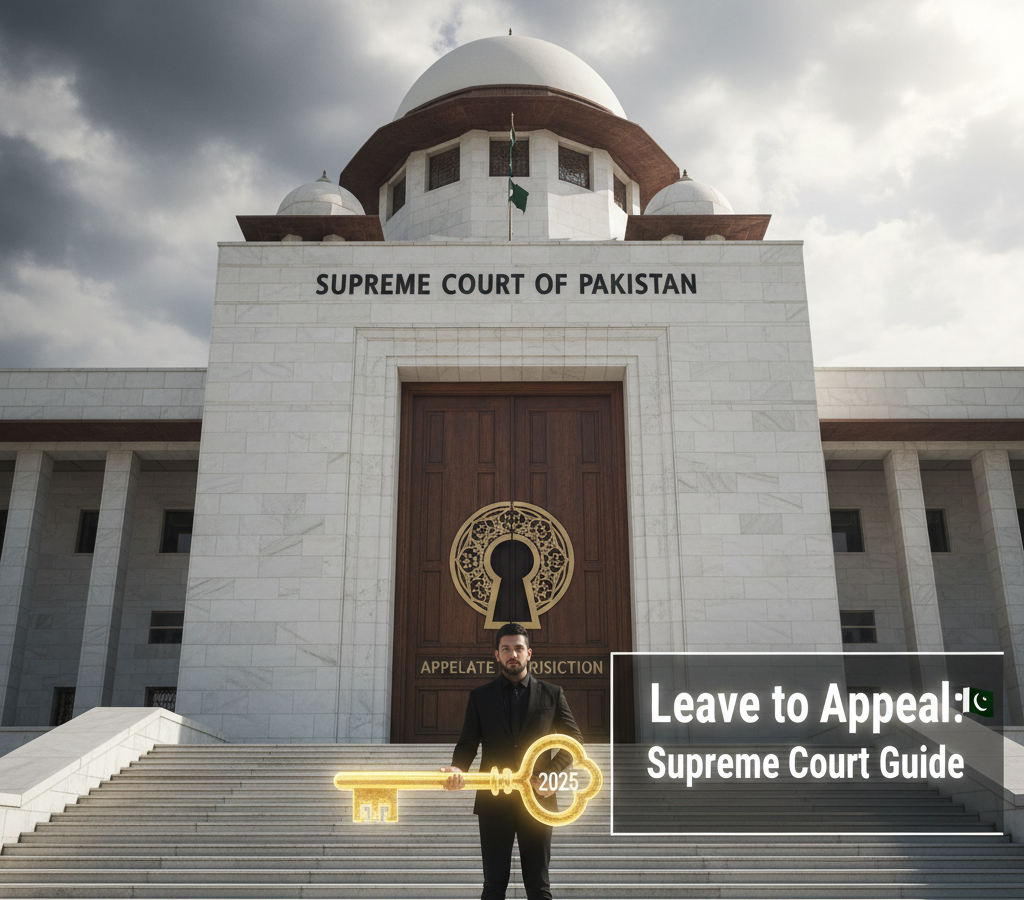
In the Pakistani legal system, you cannot simply file an appeal in the Supreme Court whenever you dislike a lower court’s decision. Instead, you must first obtain the Court’s permission. This specific permission is formally known as Leave to Appeal. Think of it as a key that unlocks the Supreme Court’s appellate jurisdiction. The Court uses this requirement as a filter to ensure that only matters involving significant legal questions or grave injustices reach its doorstep.
The Crucial Test for Granting Permission
The Supreme Court follows a clear and consistent principle when considering whether to grant a Leave to Appeal. The central question the Court asks is this: could the person seeking leave have properly been a party in the original proceedings? This means the applicant must have a direct and tangible interest in the case’s outcome. Therefore, the Court does not grant this special leave to mere bystanders. It reserves this right for those whose legal rights or interests genuinely face an impact from the judgment.
Case Study: When the Court Denies Leave
A recent Supreme Court order perfectly illustrates this principle regarding Leave to Appeal. In this case, a group of applicants sought permission against a High Court decision. However, these applicants were not originally parties to the lawsuit. They had purchased a property secretly during the trial without informing the court.
Consequently, when they later tried to challenge the outcome, the Supreme Court had to decide whether to grant them Leave to Appeal. The Court meticulously applied its test and found that the applicants disqualified themselves. Their secret purchase violated the doctrine of lis pendens (pending litigation), and they provided no justification for their initial silence.
Why Transparency Matters for Your Case
The Court’s decision highlights a critical lesson for litigants. Your conduct throughout the legal process matters immensely. If you have a legitimate interest in a property, you must act transparently. You should immediately apply to the court to join as a party. Seeking Leave to Appeal after a final decision becomes incredibly difficult if you ignored earlier opportunities to participate. The courts view such delayed attempts with skepticism because they often appear as tactics to prolong litigation unfairly.
Final Takeaways on the Legal Process
Ultimately, obtaining Leave to Appeal is a vital first step for anyone wishing to challenge a decision before the Supreme Court of Pakistan. It is not an automatic right but a privilege granted under specific conditions. The process demands that applicants demonstrate a direct interest and show they acted in good faith. Understanding this requirement is the first step in any strategy to file a successful petition before the highest court.
Expert Help for Supreme Court Appeals
Navigating the requirements for Leave to Appeal requires deep legal expertise. If you are considering challenging a High Court decision or are involved in a complex property dispute, securing skilled legal representation is essential. We provide fierce representation to ensure your voice is heard at the highest level.
For professional assistance with Supreme Court petitions and related legal matters, contact:
Muhammad Amin, Advocate 📞 Phone: 0313-9708019 | 0335-1990495 📧 Email: muhammadaminadvo111@gmail.com 📍 Location: Peshawar