
Understanding Your Dower Rights After Nikah
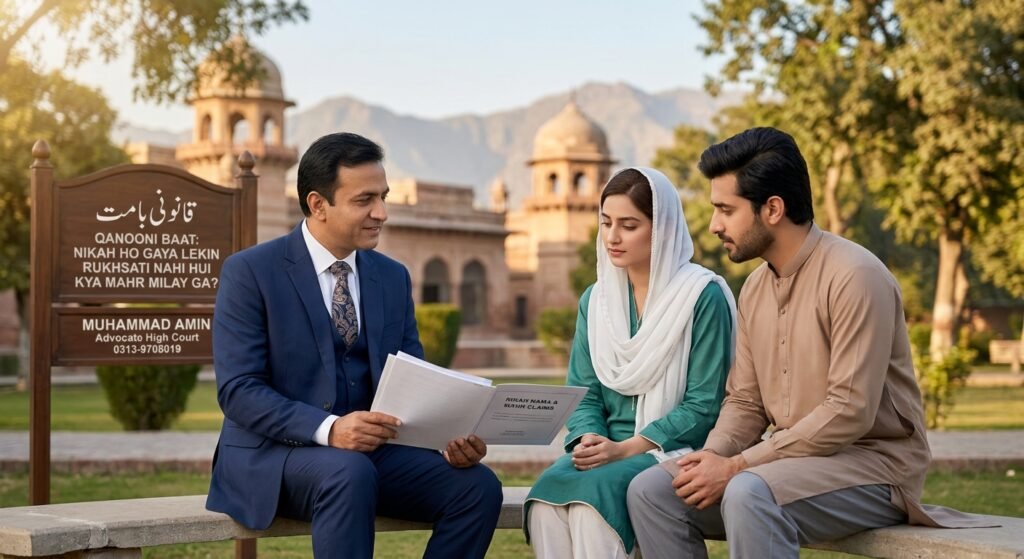
Marriage contracts in Pakistan establish immediate financial protections for women right at the moment of Nikah. Many families face severe conflict after Nikah when the Rukhsati does not take place due to misunderstandings. Husbands and their families often claim that a wife loses her dower rights because she never moved into her husband’s home. This misunderstanding creates unnecessary stress and fear for women who seek their lawful rights. The law of Pakistan protects women completely and guarantees their legal right to Mahr regardless of Rukhsati. You do not forfeit your financial protection simply because the marriage ended before cohabitation.
Dower Entitlement Without Rukhsati Under Family Law
Pakistani family statutes clearly state that Mahr forms a fundamental part of the legal marriage contract. The legal right to Mahr binds the husband from the exact second he signs the Nikah nama. Therefore, non-consummation of the marriage cannot eliminate the financial obligation of the husband. Courts consistently uphold dower entitlement without Rukhsati whenever wives demand their rightful property or money. Furthermore, Islamic law and statutory legislation treat the dower as a consideration for the contract itself. As a result, a husband cannot use the absence of Rukhsati as an excuse to withhold the dower.
How Courts Treat Prompt Mahr Recovery and Deferred Mahr
The legal system divides dower into two distinct categories which carry different rules during recovery disputes. Prompt dower refers to the amount payable immediately or on demand by the wife at any time. When a wife files a suit for prompt Mahr recovery, judges view items marked as on demand as payable right away. Conversely, deferred dower becomes due upon a specific date or upon the dissolution of marriage. Even without Rukhsati, courts enforce prompt dower demands aggressively because the wife retains full entitlement to her property. Understanding these legal categories allows women to claim houses, land, gold, and cash mentioned in their Nikah nama.
Claiming Mahr Recovery After Khula and Judicial Precedents
When a wife files for Khula before Rukhsati, specific statutory provisions govern how much dower she keeps. Section ten of the West Pakistan Family Courts Act outlines the exact rules for Mahr recovery after Khula. The law requires a wife seeking Khula to surrender twenty-five percent of her prompt dower and fifty percent of her deferred dower. High courts across Pakistan continually confirm that wives keep seventy-five percent of all prompt dower even without Rukhsati. These binding rulings prevent husbands from depriving wives of their gold, land, or financial compensation. Therefore, Khula and Mahr law in Pakistan offers clear legal remedies to recover the majority of your assets.
Why You Need Expert Legal Help to Secure Your Dower
Family court litigation requires deep technical knowledge of procedural laws, statutory limits, and high court precedents. Opposing parties often distort facts, claim false payments, or try to deny your dower entitlement without Rukhsati altogether. Working with an experienced High Court advocate ensures that the family judge receives correct legal arguments and valid precedents. Furthermore, professional legal support helps you draft precise claims for gold, immovable property, and cash dower without delays. Protecting your rights demands strong representation, clear strategies, and an advocate who understands family court procedures completely.
Contact Information
For professional assistance with law services and related legal matters, contact:
Call any time
Muhammad Amin, Advocate High Court
📞 Phone: 0313-9708019
📧 Email: muhammadaminadvo111@gmail.com
📍 Office: Office No. 14, Zeb Plaza, University Road, Tahkal Payan, Peshawar