Introduction to Service Law Disputes Pakistan
Service law disputes Pakistan govern the terms and conditions of employment for government workers. Quite often, disputes arise when a worker feels that the department treated them unfairly regarding promotions or pay scales. However, a worker cannot simply challenge every departmental order. The law requires the person to prove that they have a genuine legal grievance before the court can hear their case. For a wider look at administrative justice, you can read about global employment standards here (Outbound Link Placeholder).
The Background of the Supreme Court Case
This article analyzes a landmark judgment from the Supreme Court involving Raja Tariq Aziz and the Government. The appellant challenged a government notification that granted a higher pay scale, known as time scale BS-20, to a fellow colleague. The appellant argued that the department should not have granted this benefit to the colleague because a previous court judgment had disrupted that colleague’s service status. If you are facing a different workplace issue, check out our guide on handling workplace harassment (Internal Link Placeholder).
The Law of Limitation in Service Tribunal Appeals
The first major issue in this case surrounds the time limits for service law disputes Pakistan. Under ordinary service tribunal appeal rules, an employee must file their appeal within ninety days after receiving the official order. In this specific case, the appellant filed his case after a delay of almost one and a half years.
However, the department never communicated the order directly to the appellant, nor did the department publish it in the official government gazette. Because the printing department confirmed this lack of publication, the Supreme Court declared that the appeal was within the legal time limit.
Understanding Civil Servant Legal Standing (Locus Standi)
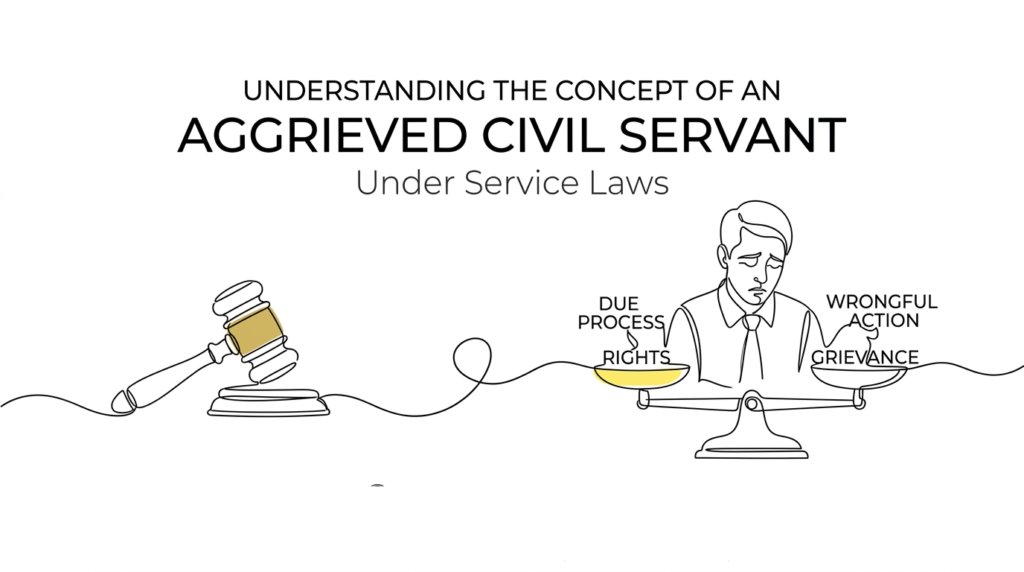
Even though the appellant won the argument on the timeline, he faced a massive hurdle regarding civil servant legal standing. To maintain a lawsuit in service law disputes Pakistan, an individual must qualify as an aggrieved civil servant under service laws. This means the individual must show that the government order directly hurt their own legal rights or terms of service. If a government decision does not harm your seniority, your salary, or your promotion chances, you do not possess the necessary legal standing to sue the government.
Why the Court Dismissed the Appeal on Merits
The Supreme Court closely examined the facts and discovered that the department had already granted the same time scale BS-20 to the appellant. The appellant happily accepted his own promotion notification and never challenged the effective date of his own advancement. Because the promotion of his colleague did not take away the appellant’s own rank or financial benefits, the appellant could not point to any personal injury. Consequently, under the aggrieved civil servant rules, the court decided that the appellant was not an aggrieved person.
The Principle of Legal Estoppel in Promotion Cases
This judgment highlights a vital rule called legal estoppel when handling service law disputes Pakistan over time scale notifications. When you accept a government benefit without any protest, you legally bar yourself from complaining about similar benefits given to others later on.
The appellant accepted his own timeline and scale, so he could not turn around and challenge his colleague’s timeline. The Supreme Court emphasized that courts do not sit to settle academic grievances or personal rivalries if no actual legal right suffers damage.
Conclusion and Final Legal Takeaways
In conclusion, winning service law disputes Pakistan requires more than just showing up within the proper timeline. You must prove your civil servant legal standing by demonstrating a direct, negative impact on your employment terms. If you receive your due benefits and suffer no personal loss, the law will not allow you to disrupt the administrative benefits granted to your peers.
Professional Legal Assistance
For professional assistance with law services and related legal matters, contact:
Muhammad Amin, Advocate 📞 Phone: 03139708019
📧 Email: muhammadaminadvo111@gmail.com
📍 Office: Office No. 14, Zeb Plaza, University Road, Tahkal Payan, Peshawar.