
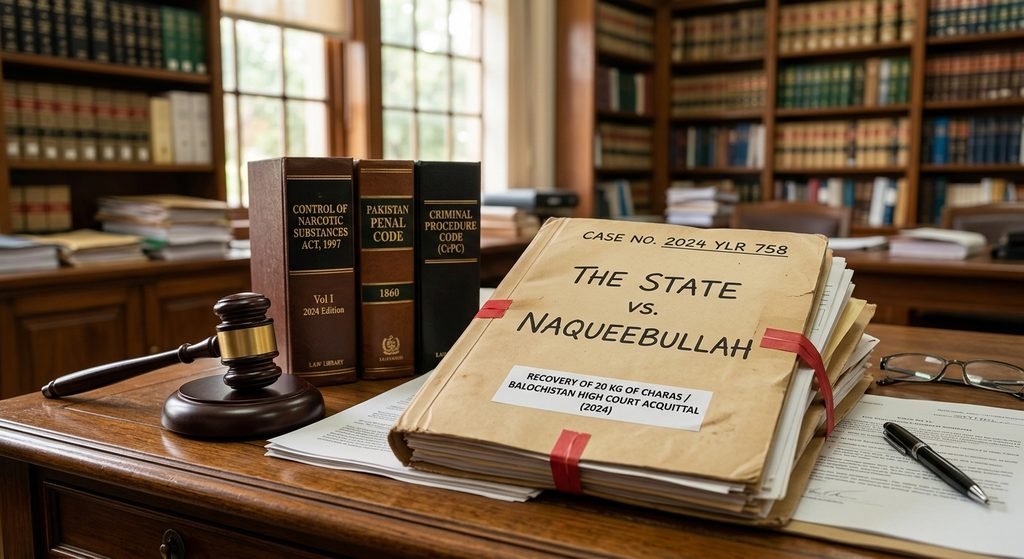
Dealing with a legal charge brings considerable stress and fear. Recently, a major court ruling highlighted how weaknesses in police investigations can help accused persons secure their freedom. When the prosecution fails to prove its allegations through reliable evidence, courts must carefully examine the record and protect fundamental rights. Understanding these legal principles helps people make informed decisions when seeking professional legal representation.
Understanding the Narcotics Case Defense
Every prosecution must present reliable evidence before a judge can convict an accused person. Consequently, courts must carefully evaluate the facts, assess the credibility of the evidence, and determine whether the prosecution has discharged its burden of proof before delivering a final judgment.
Key Facts of the Alleged Recovery
In a recent high-profile court matter, a man faced charges after police alleged that they had recovered twenty kilograms of contraband hidden inside concealed compartments of a vehicle. However, the prosecution failed to establish clearly how the officers discovered the alleged drugs.
Specifically, the prosecution did not explain the exact location where the contraband was allegedly concealed. Furthermore, the vehicle was not produced before the court for inspection. These omissions raised questions about the completeness of the prosecution’s evidence and the reliability of its account of the alleged recovery.
In a criminal trial, the prosecution must establish its case through reliable evidence. Material gaps concerning the alleged recovery may create reasonable doubt when assessed in the context of the entire record.
The High Court Decision
According to the account of the case, the High Court set aside the conviction because of weaknesses in the prosecution’s evidence. The appellant consequently secured relief after challenging the conviction through legal proceedings.
This illustrates the importance of proper judicial scrutiny. Courts must examine the evidence on record rather than accept allegations at face value. Where the prosecution fails to establish guilt beyond reasonable doubt, the accused is entitled to the benefit of that doubt in accordance with law.
Charas Recovery Case Law and Benefit of the Doubt
Pakistani criminal law requires the prosecution to prove its case beyond reasonable doubt. In narcotics cases, the manner of recovery, safe custody of the seized substance, and transmission of samples to the forensic laboratory can play an important role in determining whether the evidence is reliable.
In the case discussed, questions arose about who handled the seized substance and when the samples were delivered to the laboratory. Such gaps may undermine the prosecution’s case where they affect the integrity of the evidence or the continuity of the chain of custody.
The accused also maintained that he had no knowledge of the items allegedly concealed inside the vehicle. The court must evaluate such a defence alongside the prosecution evidence and all relevant circumstances. The ultimate question is whether the prosecution has proved the charge to the required legal standard.
A conviction cannot safely rest on suspicion alone. Where a material circumstance creates reasonable doubt about the prosecution’s case, the accused is entitled to the benefit of that doubt as a matter of right, subject to the applicable law and judicial assessment of the evidence.
Therefore, a detailed examination of recovery memos, witness statements, forensic reports, custody records, and other relevant documents is essential when challenging a narcotics prosecution.
How Your Drug Offense Defense Lawyer Protects You
Building a strong criminal defence requires legal knowledge, careful preparation, and close attention to the evidence. Every relevant detail may matter when challenging criminal allegations or identifying weaknesses in an investigation.
We examine the available case documents, assess police procedures, scrutinise forensic evidence, and identify inconsistencies or missing links in the prosecution’s case. Where legally justified, these issues can form the basis of arguments before the competent court.
Each case requires an independent assessment of its facts and applicable law. A properly prepared defence helps protect the accused person’s legal rights and ensures that the prosecution is required to prove its allegations through legally admissible and reliable evidence.
Consult a Leading Criminal Case Advocate Peshawar
Facing criminal proceedings can feel overwhelming, especially when your freedom, reputation, and family are at stake. Appropriate legal guidance can help you understand the allegations, assess the evidence, and consider the remedies available under Pakistani law.
If you or a family member is facing a narcotics charge, consult a qualified criminal defence advocate who can review the case record and explain the available legal options. Professional representation should be based on honesty, thorough preparation, and a careful application of the law.
Need Legal Assistance?
For professional assistance with criminal defence, narcotics cases, and related legal matters in Peshawar, contact our office.
Muhammad Amin, Advocate High Court
Phone: 0313-9708019
Email: muhammadaminadvo111@gmail.com
Office: Office No. 14, Second Floor, Zaib Plaza, University Road, Tahkal Payan, Peshawar, Pakistan
Call for Legal Consultation