Table of Contents
- Understanding the Arbitration Clause in Pakistan
- The Conflict Between Daewoo and the National Highway Authority
- Why Judges Support Out-of-Court Settlement Rules
- The Impact of Private Dispute Resolution on Business Deals
- How Contractual Disagreement Laws Protect Signed Agreements
- Lessons from the Legal Arbitration Process in the M-2 Case
- Final Thoughts on Business Treaty Mandates
- Contact Advocate Muhammad Amin for Legal Help
Understanding the Arbitration Clause in Pakistan
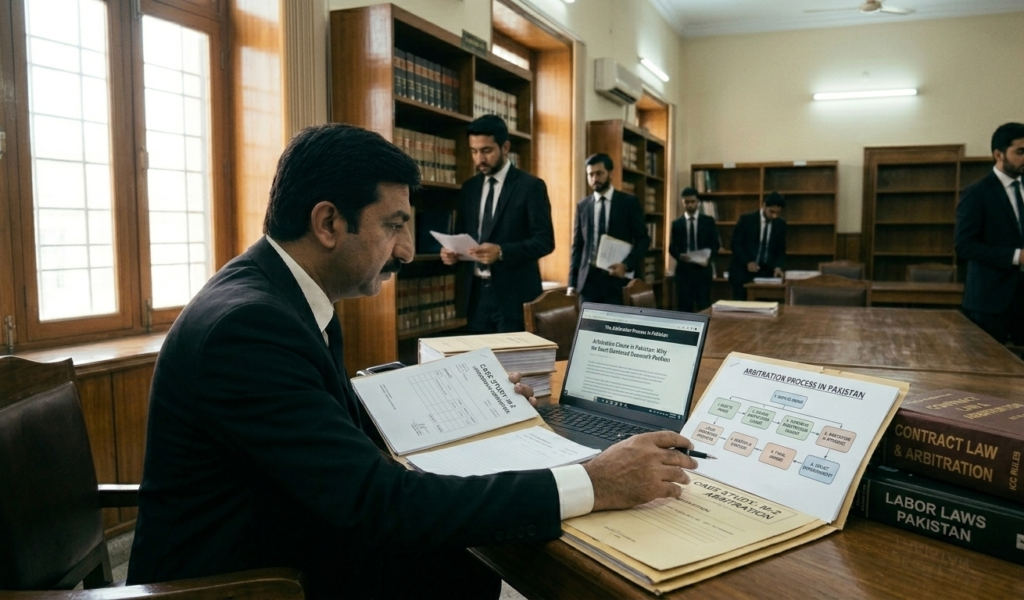
An arbitration clause in Pakistan serves as a powerful tool in any business agreement. This small section of a contract tells the parties exactly how to fix a problem if they disagree later. Instead of going straight to a public court, the parties agree to meet with a private person called an arbitrator. This process saves time and keeps business secrets safe. However, many people try to skip this step and go to the High Court anyway. As this recent case shows, judges usually send those people back to the original agreement.
The Conflict Between Daewoo and the National Highway Authority
The recent battle between Daewoo and the National Highway Authority (NHA) highlights how these rules work. Daewoo challenged a contract regarding the modernization of the M-2 Motorway. The company claimed that the authorities broke public bidding rules and removed them from service areas unfairly. They asked the Islamabad High Court to step in and stop the government from taking over their operations. Consequently, the court had to decide if it could hear a case that already had a private solution built into the contract.
Why Judges Support Out-of-Court Settlement Rules
Judges strictly follow out-of-court settlement rules to keep the legal system organized. In this case, the NHA argued that the contract contained a clear plan for resolving fights under international rules. Furthermore, a civil court had already told Daewoo to follow the contract months ago. The High Court agreed that it should not interfere in private business fights. Because both sides signed the paper willingly, they must honor the promise to settle things outside of the traditional courtroom.
The Impact of Private Dispute Resolution on Business Deals
Private dispute resolution changes how companies handle large projects like motorways. When a contract includes these terms, the High Court loses its power to hear simple “writ petitions.” This means you cannot just file a case to stop a government department if your contract says otherwise. Therefore, businesses must prepare for a long and detailed private hearing. This rule ensures that companies take their signed promises seriously and do not waste the time of the public judges.
How Contractual Disagreement Laws Protect Signed Agreements
Contractual disagreement laws protect the integrity of the business world in Pakistan. The court referred to older cases to prove that judges always enforce these clauses. For example, the law says that a court must stay out of a private deal unless the government does something truly illegal or outside its power. Since Daewoo’s problem came directly from a contract disagreement, the court pushed them back toward the private path. This protects the NHA and other departments from constant and unnecessary lawsuits.
Lessons from the Legal Arbitration Process in the M-2 Case
The legal arbitration process teaches us that you cannot easily ignore a signed contract. Daewoo tried to use public interest rules to get around their private agreement. However, the court saw right through this plan. The judges ruled that a “writ petition” is not a valid way to solve a contract fight. If you have an arbitrator named in your deal, you must talk to that person first. This case sets a strong example for every company working on government projects in Pakistan.
Final Thoughts on Business Treaty Mandates
Business treaty mandates and arbitration rules provide a clear map for resolving big fights. You must read every line of your agreement before you sign it. If you agree to an arbitration clause, you give up your right to go to the High Court for that specific issue. This keeps the business environment stable and predictable for everyone. Always ensure you have a strong legal plan before you start a project or enter a dispute with a government agency.
Contact Advocate Muhammad Amin for Legal Help
Legal battles over contracts and arbitration require a deep understanding of the law. If you face a disagreement with a business partner or a government department, you need expert guidance. We help clients navigate these complex rules and protect their rights in every forum. You can reach out to our office for professional assistance with any legal matter in Peshawar or across Pakistan.
Muhammad Amin, Advocate Phone: 0313-9708019 Email: muhammadaminadvo111@gmail.com Office: Office No. 14, Zeb Plaza, University Road, Tahkal Payan, Peshawar