Table of Contents
- Understanding the Legal Foundation of Marriage Rights
- The Importance of Dower Rights in the Marriage Contract
- The Consequences of an Illegal Second Marriage
- Why Courts Cannot Force Khula Divorce
- Protecting Financial Security After a Marriage Breakdown
- The Role of the Supreme Court in Upholding Women’s Rights
- Final Thoughts on Securing Your Legal Entitlements
Understanding the Legal Foundation of Marriage Rights
Legal protections for wives in Pakistan stem from both religious principles and statutory laws. When a marriage faces difficulties, understanding these protections becomes essential for every woman. Many people feel confused by the complexities of the legal system, yet the core rules remain straightforward. The law ensures that no husband can ignore his responsibilities without facing legal consequences. Furthermore, the judicial system acts as a shield to prevent unfair treatment during divorce proceedings. This article explores how recent rulings reinforce these fundamental rights for women across the country.
The Importance of Dower Rights in the Marriage Contract
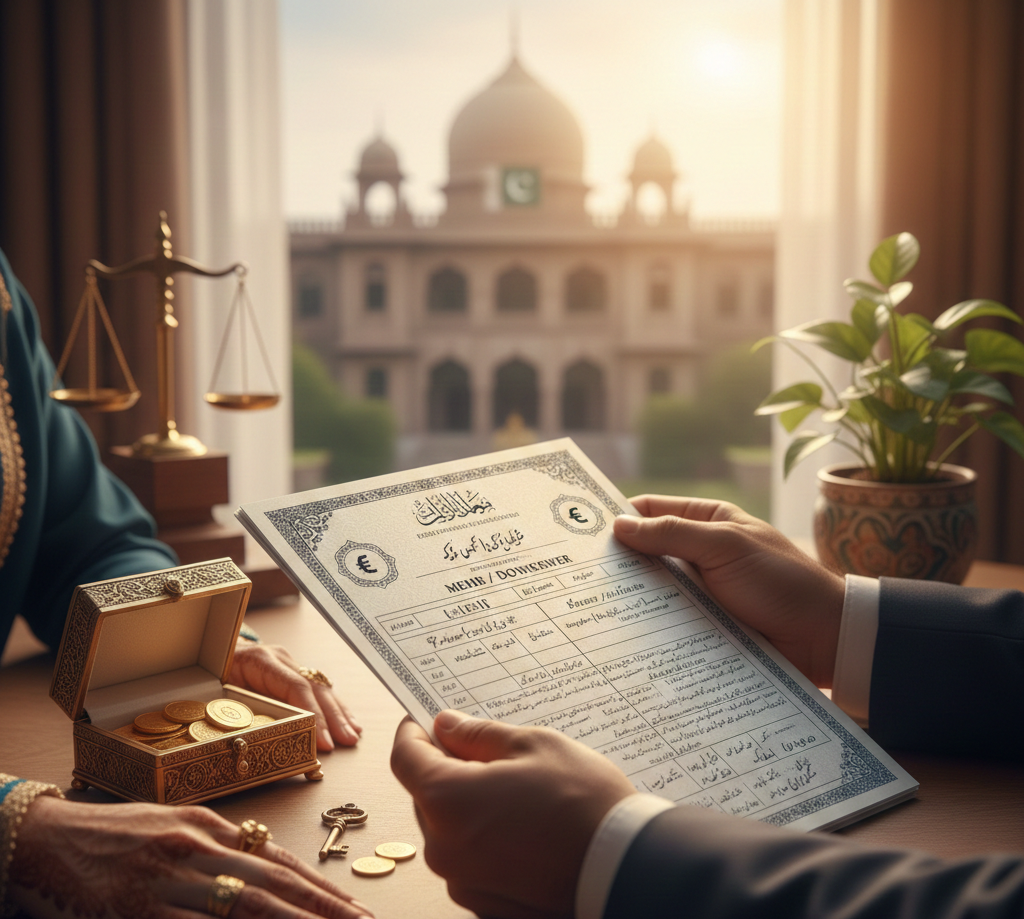
A wife’s dower rights represent a sacred and binding financial obligation that the husband must fulfill. The Nikah Nama serves as a formal agreement that outlines the specific amount of money or property the husband owes to his wife. Whether the dower is prompt or deferred, the law considers it a debt that the husband must pay. In many cases, husbands try to avoid this payment by claiming they already settled the debt or by blaming the wife for the separation. However, the courts consistently rule that the dower belongs to the wife regardless of the reasons for the end of the marriage.+1
The Consequences of an Illegal Second Marriage
The law imposes strict requirements on men who wish to marry a second time. According to the Muslim Family Laws Ordinance, a husband must obtain formal permission from the Arbitration Council before entering a new marriage. If a husband ignores this rule, he commits a legal violation that gives his first wife a strong ground for divorce. This specific legal protection ensures that men cannot bypass the rights of their first wives. Consequently, a wife can seek a judicial dissolution of marriage based on this illegal act while still maintaining her full claim to her dower and other financial benefits.+1
Why Courts Cannot Force Khula Divorce
Khula is a specific type of divorce where the wife chooses to end the marriage, often by surrendering her dower. Crucially, only the wife can initiate this process because it involves giving up her financial rights. Sometimes, lower courts mistakenly grant a Khula even when the wife did not ask for it. This error unfairly strips the woman of her dower. The Supreme Court has clarified that judges do not have the authority to impose Khula on a woman. If a wife wants a divorce due to her husband’s faults, she should receive it through a judicial decree that preserves her financial entitlements.
Protecting Financial Security After a Marriage Breakdown
Financial stability remains a primary concern for women after a divorce. Beyond the dower, a wife has the right to recover her dowry articles and receive maintenance for her children. These financial claims stand independently of the divorce itself. Even if the marriage ends due to irreconcilable differences, the husband must return the property that belongs to the wife. The legal system provides clear mechanisms to recover these items. Therefore, wives should feel confident in pursuing their rightful claims through the family courts.
The Role of the Supreme Court in Upholding Women’s Rights
The Supreme Court of Pakistan plays a vital role in correcting mistakes made by lower courts. In landmark cases, the highest court has overturned decisions that ignored the wife’s dower rights or improperly granted Khula. By doing so, the Supreme Court sends a powerful message that the law protects women from procedural injustices. These rulings serve as a guide for all legal practitioners and families. They ensure that the spirit of the law aligns with the actual outcomes in the courtroom, providing true justice for those who seek it.
Final Thoughts on Securing Your Legal Entitlements
Navigating the legal path during a divorce requires a clear understanding of your status and rights. The law provides extensive protections regarding dower, second marriages, and child maintenance. By staying informed, you can protect your future and ensure that you receive what the law promises. Every woman should remember that her marriage contract is a powerful legal document. If you face a situation where your rights are under threat, the judicial system offers a path to reclaim your dignity and your financial security.
For professional assistance with law services and related legal matters, contact:
Muhammad Amin, Advocate 📞 Phone: 0313-9708019
📧 Email: muhammadaminadvo111@gmail.com