Table of Contents
- Introduction to the New Evidence Standards
- Understanding the Case of Zahid Sarfaraz Gill
- The Critical Need for Digital Arrest Documentation
- Common Failures in Narcotics Investigation Reforms
- How Visual Evidence in Drug Trials Protects the Innocent
- New Directives for Police Search Transparency
- Final Summary of the Court Decision
- Contact Advocate Muhammad Amin for Legal Help
Introduction to the New Evidence Standards
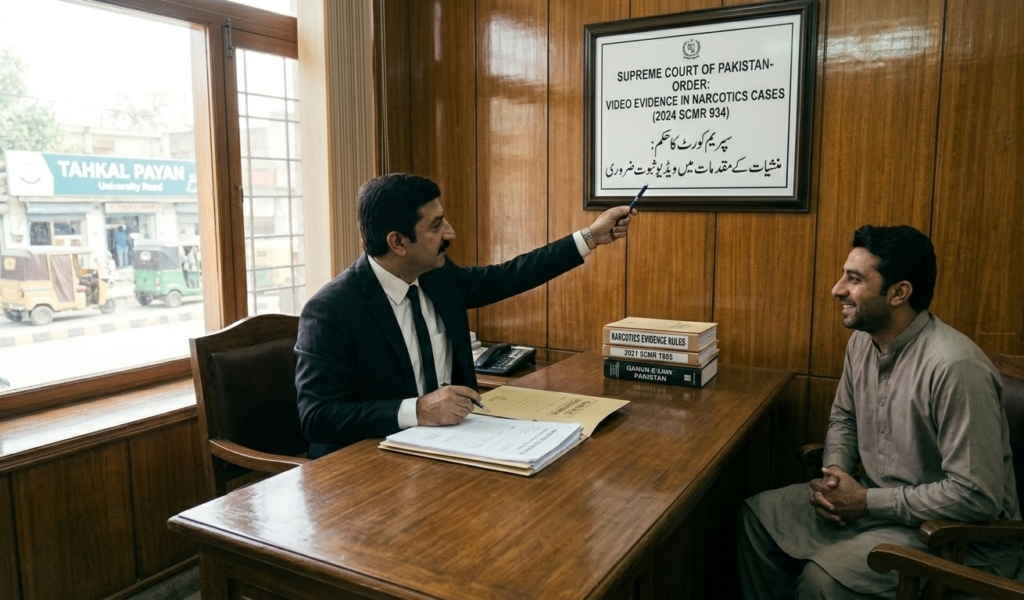
The Supreme Court of Pakistan recently changed the way police handle drug arrests across the country. Through a historic ruling, the judges now require law enforcement to use modern technology during raids. These narcotics evidence rules ensure that every arrest remains transparent and honest. Consequently, officers must now record videos and take photos when they seize illegal substances. This shift aims to stop false accusations and improve the quality of justice in our courtrooms.
Understanding the Case of Zahid Sarfaraz Gill
The court passed this order while hearing the bail application of Zahid Sarfaraz Gill. The police claimed they caught him with over 1,800 grams of charas, but they offered no solid proof. Because the prosecution only provided police statements without any independent witnesses, the judges felt suspicious. The accused person even claimed that the police framed him because he filed a complaint against them earlier. Therefore, the Supreme Court granted him bail and questioned why the officers did not record the arrest.
The Critical Need for Digital Arrest Documentation
Digital arrest documentation provides a clear and undeniable record of what happens during a police raid. Most police officers carry smartphones with high-quality cameras in their pockets every day. The court argued that failing to use these tools shows a lack of professional responsibility. If an officer records the search, they prove exactly where they found the drugs. This video proof makes it very difficult for a criminal to deny their crimes in front of a judge later.
Common Failures in Narcotics Investigation Reforms
For many years, narcotics investigation reforms struggled because the system relied solely on human testimony. Police officers often act as the only witnesses in their own cases, which creates a conflict of interest. This old method leads to weak prosecutions and allows many actual criminals to walk free on technicalities. Moreover, it causes the courts to waste precious time on endless bail hearings. By introducing video requirements, the Supreme Court hopes to fix these deep-seated flaws in the investigative process.
How Visual Evidence in Drug Trials Protects the Innocent
Visual evidence in drug trials acts as a shield for citizens who face unfair targeting by the authorities. Article 164 of the Qanun-e-Shahadat Order already allows the use of modern gadgets as evidence in court. The Supreme Court emphasized that visual proof confirms the presence of the accused at the exact crime scene. Without a video, the court cannot easily verify if the police truly recovered the drugs from the suspect. This new standard ensures that judges base their decisions on facts rather than just stories.
New Directives for Police Search Transparency
The Supreme Court issued several strong directives to increase police search transparency across all provinces. The judges sent copies of this order to the Ministry of Narcotics Control and every Inspector-General of Police. They urged the government to amend the official rules for the Anti-Narcotics Force (ANF) and local police stations. These new rules will soon make photo and video documentation mandatory for every single drug-related search. This change marks a major step toward a more modern and fair legal system in Pakistan.
Final Summary of the Court Decision
This ruling from the Supreme Court strengthens the foundations of a fair trial for every citizen. By demanding video proof, the court reduces the chances of police corruption and ensures that true criminals face punishment. Law enforcement agencies must now adapt to these digital requirements to win their cases in court. This decision ultimately benefits society by making drug investigations more credible and professional. It protects the rights of the individual while helping the state fight the drug war more effectively.
Contact Advocate Muhammad Amin for Legal Help
Legal challenges in narcotics cases require a lawyer who understands the latest Supreme Court rulings. If you or your family members face drug-related charges, you must ensure that the police followed the correct procedures. We provide expert legal defense and guide our clients through every step of the criminal justice process. Our office stays updated on all new evidence rules to give you the best possible representation in court.
Muhammad Amin, Advocate Phone: 0313-9708019 Email: muhammadaminadvo111@gmail.com Office: Office No. 14, Zeb Plaza, University Road, Tahkal Payan, Peshawar